
MOBILE & CART SYSTEMS
Modular mobile platforms for transporting, staging, servicing, and integrating equipment across industrial, aerospace, and test environments.
Infinity Skies Mobile & Cart Systems are engineered mechanical platforms that move equipment, subsystems, and tools while preserving alignment, interfaces, and configuration control.
These systems replace improvised carts, welded one-offs, and fragile shop solutions with standardized, modular mobile infrastructure.
Product Families Used
Example Use Environments
- Mobile test stations
- Field integration carts
- Maintenance platforms
- Portable calibration systems
What This System Solves
- Equipment alignment shifts during transport
- Mounting patterns change between programs
- Carts cannot scale or reconfigure
- Safety and handling vary by build
- Documentation and life cycle control are missing
Infinity Skies treats mobility as an engineered interface, not an afterthought.
Core Modules
- Machined base plates
- Structural interface blocks
- Equipment mounting plates
- Riser and spacer blocks
- Wheel and caster interface modules
- Safety and handling accessories
All modules follow the Unified Modular Standard for interchangeability.
Example Applications
- Test equipment carts
- Ground support equipment (GSE) carts
- Assembly and integration carts
- Instrumentation and electronics carts
- Battery and power system carts
- Maintenance and service platforms
Used across production floors, labs, and launch facilities.
Expansion Path
Mobile & Cart Systems integrate seamlessly with:
- Fixture & Alignment Systems
- Test & Qualification Systems
- Enclosure & Electronics Interface Systems
- Plug-and-Play Equipment Modules
Creating mobile, reconfigurable system architectures.
Mobile Base Platforms
Primary structural and mobility foundation.
- Machined base plates
- Structural frame interfaces
- Caster and wheel mounting patterns
- Leveling and stabilization interfaces
Provides predictable load paths and stability.
Equipment Mounting Interfaces
Standardized interfaces for payload integration.
- Equipment interface plates
- Adjustable mounting rails
- Fixture and datum blocks
- Quick-change mounting surfaces
Maintains alignment during movement.
Structural Frames & Towers
Vertical and horizontal support structures.
- Riser towers
- Frame extension modules
- Multi-level mounting structures
- Reinforced load-bearing interfaces
Supports complex payload geometries.
Handling, Safety & Ergonomics
Features that enable safe transport and use.
- Push and pull handles
- Lift points and tie-downs
- Guarding and edge protection
- Center-of-gravity management features
Designed for industrial handling environments.
Service, Storage & Integration Features
Functional elements for operation and maintenance.
- Tool and part storage trays
- FOD-safe handling surfaces
- Cable routing and management
- Power and instrument mounting
Transforms carts into working platforms.
Engineer-to-Engineer
Mobility should never break alignment.
Explore standard mobile platforms or request a cart system configured for your payload, environment, and life cycle requirements.
MODULAR MOUNTING SYSTEMS
The Structural Backbone of Scalable Mechanical Integration
Infinity Skies Modular Mounting Systems provide a standardized mechanical foundation for integrating equipment into machines, skids, test stands, enclosures, racks, and facility infrastructure.
These systems eliminate one-off adapter plates, reduce alignment risk, and allow equipment to be repositioned, upgraded, or replaced without structural redesign.
If a subsystem mounts once, it mounts forever.
Why This System Exists
Most integration failures occur at the mechanical interface layer.
Traditional mounting approaches introduce:
- Misaligned hole patterns
- Inconsistent datum references
- Tolerance stack accumulation
- Field slotting and rework
- Redesign when equipment changes
- Loss of revision traceability
Infinity Skies replaces improvised mounting logic with governed mechanical architecture:
- Unified interface grid geometry
- Controlled primary, secondary, and tertiary datums
- Predictable tolerance classes
- Revision-controlled components
- Platform-level interoperability
This reduces integration risk before hardware ever reaches the floor.
What This System Is
A governed modular architecture composed of:
- Interface Plates
- Adapter Plates
- Structural Base Plates
- Skid & Structural Interface Plates
- Datum & Reference Blocks
- Controlled Fastening Patterns
What This System Is Not
- Not welded one-off mounting frames
- Not application-specific sheet metal brackets
- Not disposable custom hardware
- Not uncontrolled bolt patterns
This is engineered infrastructure, not fabrication.
All components conform to the Infinity Skies Unified Modular Mechanical Standard (UMMS), ensuring interoperability across product families and system generations.
Core Modules
Create anything
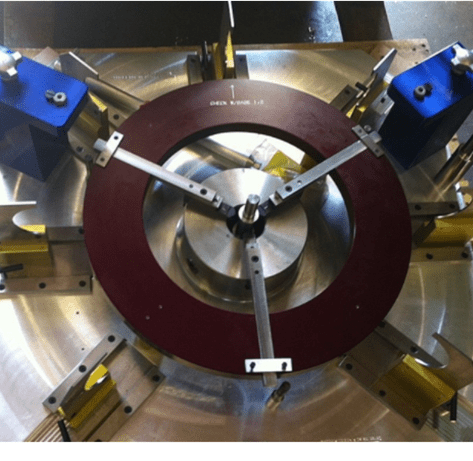
Interface Plates
Normalize mounting patterns and establish repeatable reference planes between equipment and structure.
Learn More →
Create anything
Adapter Plates
Bridge dissimilar geometries while preserving datum integrity and load paths.
Learn More →
Create anything
Base & Structural Plates
Define primary structural geometry and distribute loads within controlled tolerance classes.
Learn More →
Create anything
Datum & Alignment Blocks
Establish repeatable geometric references for accurate subsystem positioning.
Learn More →
Create anything
Skid & Frame Integration Plates
Enable scalable integration of modular structures across transportable platforms.
Learn More →
Create anything
What This System Solves:
Integration Risk Reduction: Removes dimensional uncertainty between subsystems and structural platforms.
Faster Equipment Replacement: Upgrade or swap equipment without re-drilling, slotting, or redesign.
Multi-Site Repeatability: Deploy identical mounting logic across multiple facilities.
Reduced Engineering Rework: Reuse mounting architecture across product generations.
Controlled Load Paths: Ensure structural stability under static and dynamic loading conditions.
Example Deployment
An OEM building automated inspection systems required consistent integration of:
- Robotic arms
- Vision enclosures
- Precision test fixtures
- Safety guarding structures
Previously, each installation required custom adapter plates and field modifications.
After deploying Infinity Skies Modular Mounting Systems as the structural interface layer:
Reduced engineering integration time by 40%
Eliminated field slotting and rework
Deployment replicated across three (3) facilities
Simplified replacement and upgrade cycles
Common Use Environments
Modular Mounting Systems are frequently deployed in:
Technical Governance
All Modular Mounting Systems conform to:
- Unified Modular Mechanical Standard (UMMS)
- IS-TQS-001 – Tolerances & Quality Standard
- IS-MFS-001 – Materials & Finishes Standard
- IS-SKU-001 – SKU & Configuration Control
This ensures:
- Structural repeatability
- Audit-ready documentation
- Cross-supplier manufacturability
- Long lifecycle support
- Controlled revision history
Related Modular Components
This system is constructed using configurable components from the Infinity Skies modular product families, including:
- Interface Plates & Adapters
- Datum Blocks & Precision Hardware
- Structural Base Plates
- Skid & Frame Integration Plates
(Insert WooCommerce product grid here)
FAQ’s
A modular mounting system is a standardized mechanical interface architecture that enables repeatable equipment integration without custom redesign.
Unlike one-off fabrication, modular mounting systems use governed interface geometry and controlled datums to preserve compatibility across upgrades and facilities.
Yes. Adapter plates and translation components allow legacy geometries to interface with the Infinity Skies modular platform while preserving structural integrity.